Kalpitiya to Mannar: Weather, Animals, and the Limits of Optimism
We left Kalpitiya assuming the weather would behave.
It was, after all, the end of the rainy season. If it rained, it would be brief. It was hot. We’d dry quickly. Rain gear stayed buried.
That optimism lasted about ten minutes.
Because we couldn’t ride north through Wilpattu National Park, the route dragged us south and east, almost as far as Anuradhapura, before we could turn back towards the coast toward Mannar. On the map it looks like a detour. On the road, it became a slow accumulation of water.
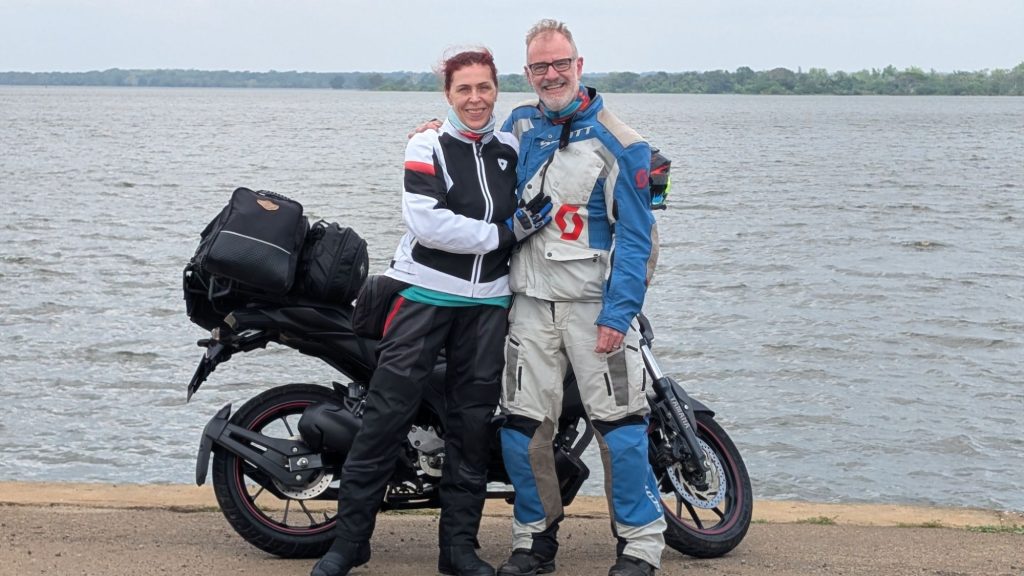
We stopped to stretch our legs. Dalma pointed ahead. A few metres ahead it was raining Not a shower—an unambiguous downpour. By the time we pulled away again, we were already soaked, and the rain simply kept finding us. Rain after rain after rain.
Sri Lanka doesn’t ease you into things. Along that road there were cows everywhere. Donkeys. An absurd number of dogs—wandering, sleeping, crossing without warning, entirely uninterested in self-preservation. At one point a cow stepped onto the road directly in front of Dalma at the exact moment a peacock flew across her field of view, low and fast. For a second her brain stalled, trying to rank hazards: peacock or cow. Cow won.
The road itself, though, was spectacular. Quiet. Open. One of those rides where the landscape keeps expanding even as conditions deteriorate. We turned off just short of Anuradhapura and headed north, and for a while it felt like the sort of road you ride for no reason other than that it exists.
The problem was the wind.
Wind on a hot day is a gift. Wind when you’re completely wet is something else entirely. Dalma was wearing mesh gear and was soon wet and cold. Not metaphorically—physically. Shivering, teeth on edge. She changed gloves. She added layers. Everything was already wet, so every layer just became another way of holding water against skin.
The fix, when it came, was improvised and faintly ridiculous. The rain cover from one of the bag — unused, because the bag is actually pretty waterproof and most of our gear is in wet bags, went under her jacket, pressed against her chest. Crude, but effective. The cold backed off enough that she could keep riding.
After that, there was only one strategy: don’t stop.
If we stopped for too long, she wasn’t sure she’d start again. So we kept moving.
Coming into Mannar, the land thins out into water and wind. The road stretches across open wetlands—salt pans, mangroves, open water on one side, marsh on the other. It’s hard to tell whether you’re crossing a bridge or simply floating between places. The wind was relentless. The light was flat. It was beautiful in a way that didn’t ask for appreciation at the time.
We arrived wet, cold, and tired. The sort of tired that doesn’t announce itself loudly, just settles in.
The next day, the ride north to Jaffna was postponed. My leg had other ideas.
What followed was a long, deeply boring day in a basic Sri Lankan hospital while doctors ruled out a deep vein thrombosis and settled on a general infection, possibly cellulitis. Dalma worried. I lay there, mostly waiting. The ward was simple. The care was excellent. Tests were done efficiently. Antibiotics appeared when they were needed. No drama, no nonsense.
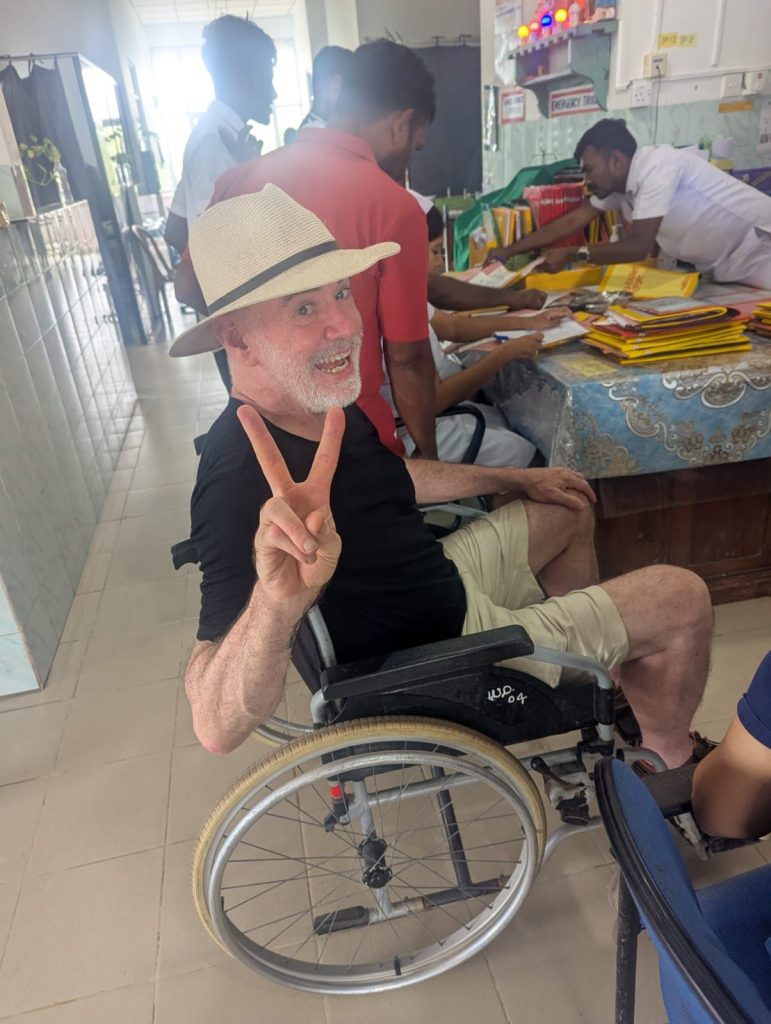
It was a reminder that travel isn’t just about landscapes and roads. Bodies have limits. Weather compounds small mistakes. Optimism has a shelf life.
We didn’t reach Jaffna that day. That was fine. Mannar had already given us enough: a hard ride, a quiet road, and the gentle but firm suggestion to slow down.
Sometimes the journey insists on being felt.