Between Mannar and Jaffna, the Map Goes Quiet
Yesterday was supposed to be the ride from Mannar to Jaffna. Instead, it began in a place that exists slightly outside travel altogether.
In Mannar, I ended up in hospital. I had a pain in the right calf, which was a bit swollen and hot. Dalma was fussing and insisted we go to hospital. I know better than to ignore her, so we went. The hospital quickly checked me in to rule out DVT, which they did. Eventually, they admitted that they didn’t quite know what it was. Possibly cellulitis, possibly a leg infection — the diagnosis hovered rather than landed — but serious enough that we stayed an extra day.
Hospitals are strange places at the best of times, but this one felt particularly liminal: not quite alarming, not exactly reassuring, just a functional pause in the journey where the rules changed temporarily. It was was bare-bones in the truest sense. No aesthetic effort. No attempt to soothe. If you come from a world of professional signage and aggressively clean waiting rooms, it looked confronting. To Dalma, born in Romania in the 70s, it looked positively unhygienic, and the idea of picking up an additional infection while being treated for the first one felt like an unnecessary side quest. Developing world hospitals can deliver excellent care, but they also ask you to surrender a certain level of control.
The care itself was good. Calm. Competent. Kind. I was given antibiotics, scans, blood tests, and medication without drama. At one point, I received a small handful of pills with the reassuringly vague instruction: just take it. No explanation. No dosage schedule. Trust was assumed, and I complied.
We were discharged in the evening after being seen by the senior doctor, who mostly wanted to talk cricket. We were told to return in the morning to work out the cost, because the office was closed. When we did return, it became clear this had not been factored into the system. no-one was quite sure how to bill us. There was confusion, paperwork, and whispered consultation, as though they were trying to remember how billing works. Eventually, a figure emerged. For a day in hospital, tests, scans, medication, and care, the total came to about sixty dollars.
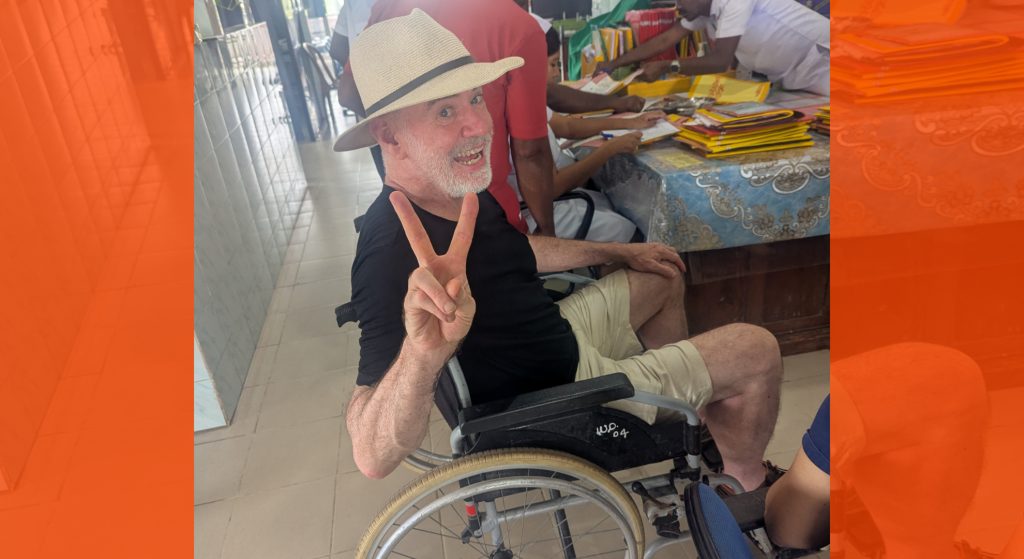
The next day (this morning actually), we left Mannar around 11:30, stepping back into travel as if nothing had happened.
The weather was perfect. We left Mannar the way we’d come in, over a long viaduct with birds and occasionally autos divebombing us. We were a little concerned as Google said the road was closed, and the road around added 100km to the trip. The road on which which found ourselves almost immediately thinned out into long, empty stretches, open, straight, and eerily quiet. No closures. No traffic. No urgency. Just distance. I loved it. This is my preferred geography: places that feel like they might fall off the map if you’re not paying attention. Dalma loved it too, though she insists this is because she hates people. I think she’d do well in the apocalypse, assuming the apocalypse didn’t involve crowds.
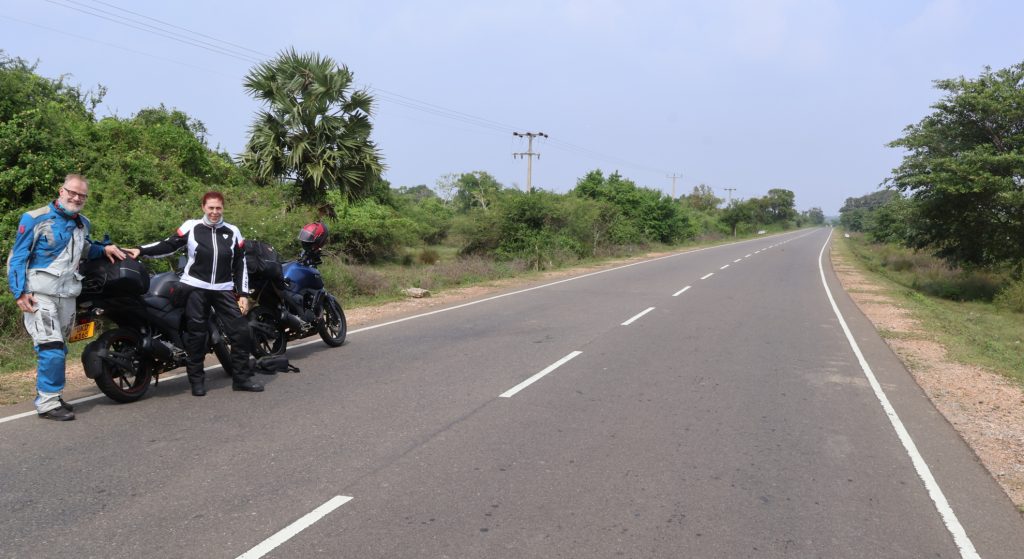
We passed through villages that appeared briefly and then vanished again — a lone cyclist, a asthmatic scooter emerging from nowhere — human presence flickering on and off like a bad signal. And then we were alone again. It felt like riding along the margin of the world, where detail thins out and the landscape stops trying to impress you. Here there be dragons!
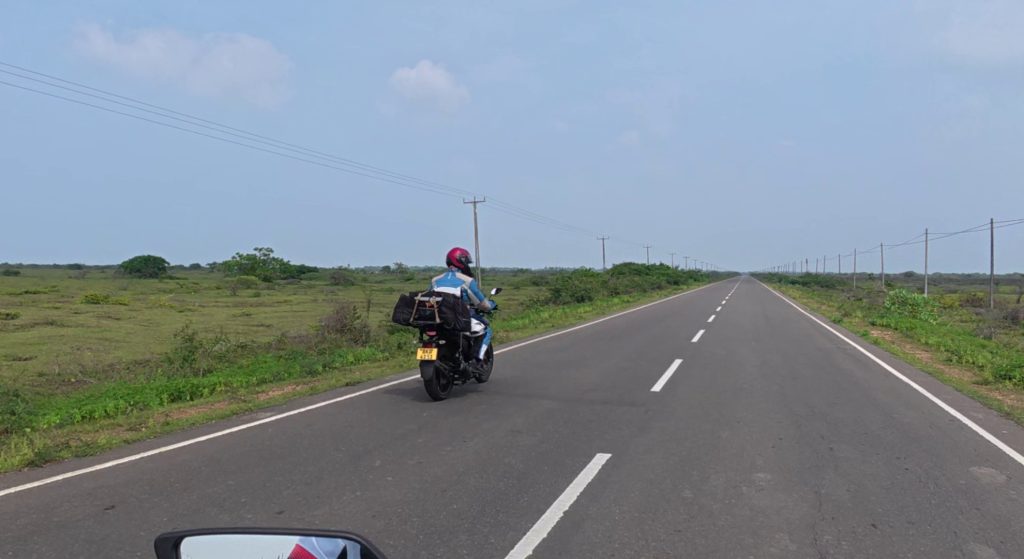
Closer to Jaffna, the wind arrived. Riding into it was physically hard work. Anything over about 60 or 65 km/h felt like my head might detach and continue on without me. The bikes felt underpowered, my neck felt overworked, and progress became something you negotiated rather than assumed. Still, the light was good, the scenery wide and calm, and it felt like the correct way to arrive somewhere.
Traffic into Jaffna was more assertive, edging toward chaotic, but manageable at the time we arrived. Later, when we walked through the city centre, it revealed its fuller personality — louder, denser, and unmistakably closer to India in rhythm and feel than anywhere we’d been so far. The roads themselves were mostly excellent, with only the occasional pothole or crumbling patch to remind you where you were.
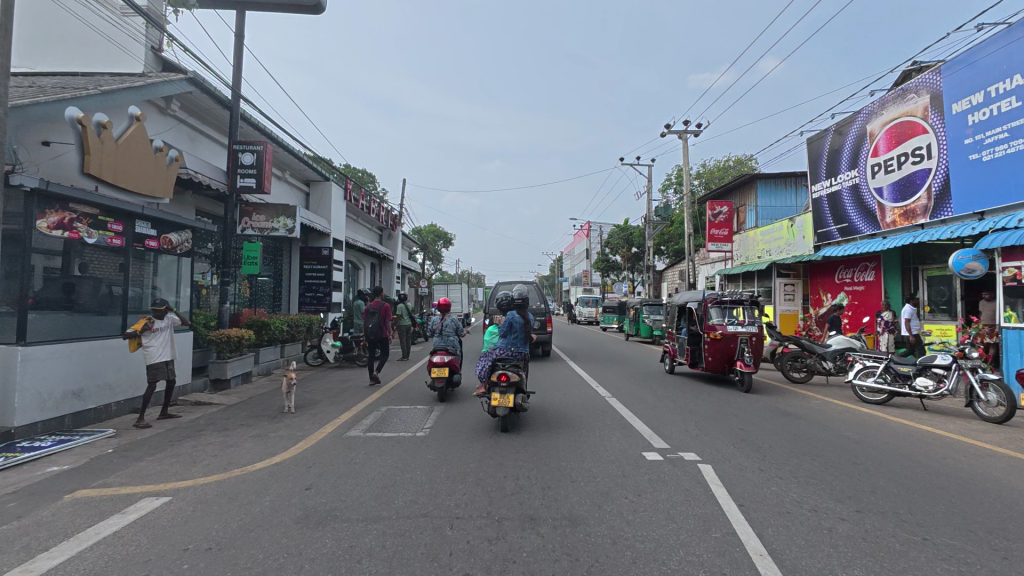
Jaffna sits near the northern edge of Sri Lanka, closer to India than anywhere else we’ve been. There’s even a ferry connection that’s recently been reinstated. Whether that explains the atmosphere or not, it feels distinct — not just geographically, but psychologically. A place shaped by proximity and history, sitting at the edge rather than the centre.
And that was the ride. Delayed by illness, carried by empty roads, shaped by wind and uncertainty. Not the journey we planned, but very much the one we were given.