Ruins, Rain, and the Road South
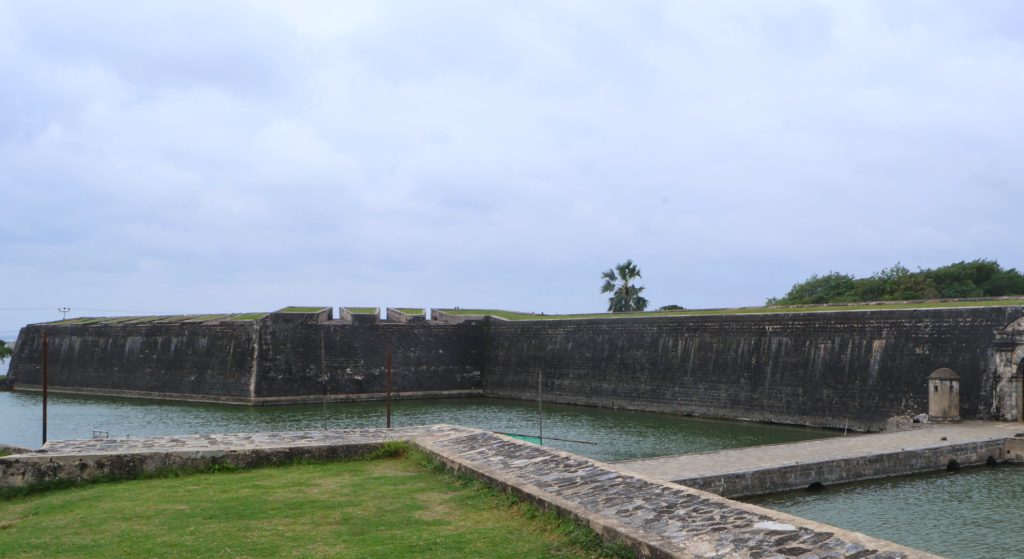
We stayed in Jaffna a little longer than planned. We weren’t feeling great — slightly queasy, not quite ourselves — but we went to the fort anyway. Jaffna Fort is one of those places that looks complete from a distance and unfinished up close. A second, quieter marker of the war.
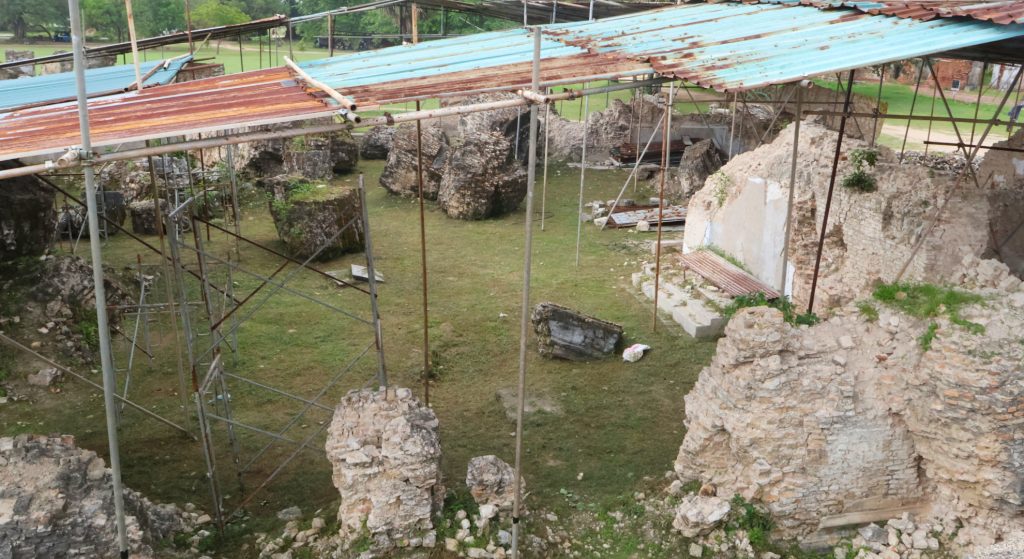
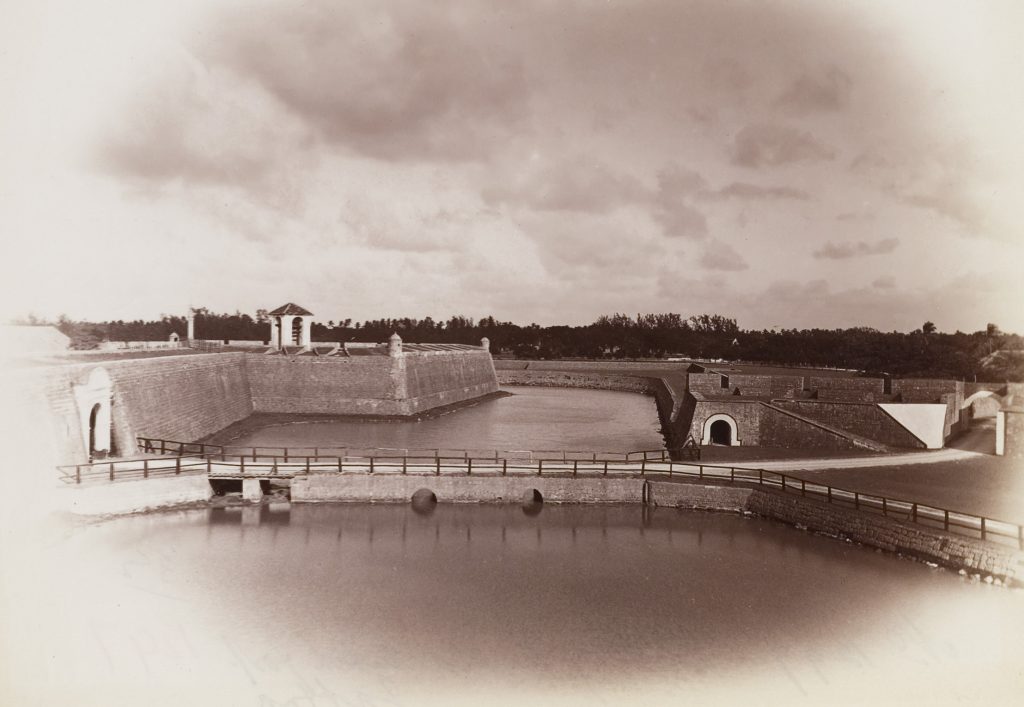
It’s a beautiful star fort, one of the best examples in South Asia. Built by the Portuguese, expanded by the Dutch, inherited by the British — a neat colonial relay. From above, it still makes sense. From the ground, less so. Inside the walls, much of what once stood there is simply gone.
There are photographs of elegant buildings from the eighteenth century: offices, residences, orderly rooms. They’re clearly fairly recent. What remains now isn’t ruin in the romantic sense, but destruction so complete it barely reads as architecture at all. Large fields of broken stone. Walls erased rather than weathered. What struck Dalma most was how little this was explained. Display after display traced the fort’s long European history in careful detail, but only at the very end — almost as an afterthought — a single sentence noted that much of it was destroyed during the civil war. No dates. No context. Just that.
It felt deliberate. Or cautious. Or unresolved. Perhaps all three.
And of course, it’s complicated. The fort is both a casualty of the war and a symbol of colonial occupation. It felt…uncomfortable. Unfinished. And I think that’s ok. It’s possible to feel uncomfortable in the space without needing to resolve that discomfort. The place seems content to let you sit with it.
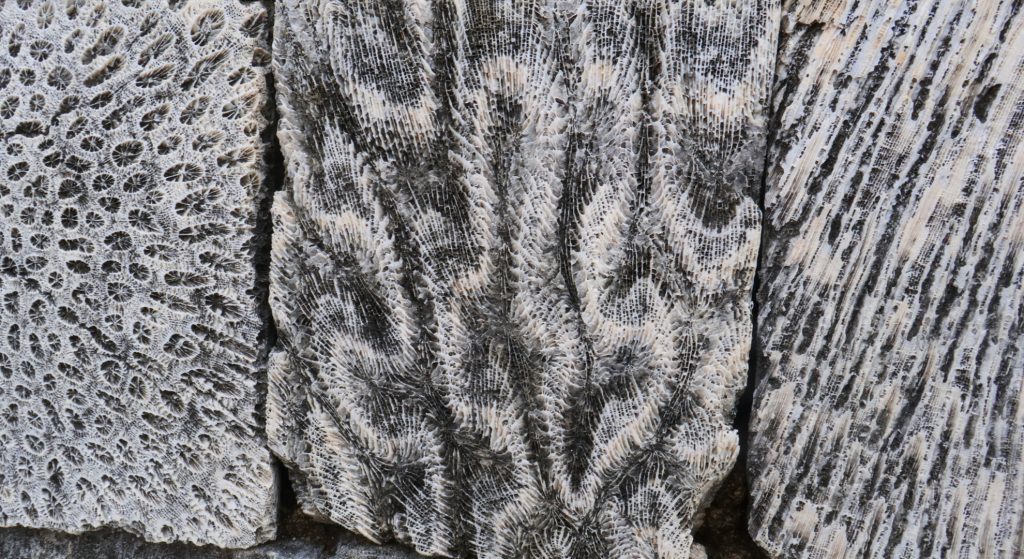
The next day we felt better, or at least functional, and decided to leave. The Sri Lankan Meteorology Department was forecasting serious rain, with the following day expected to be worse. We aimed to stay ahead of it by departing on what was supposed to be the last dry day.
It wasn’t.
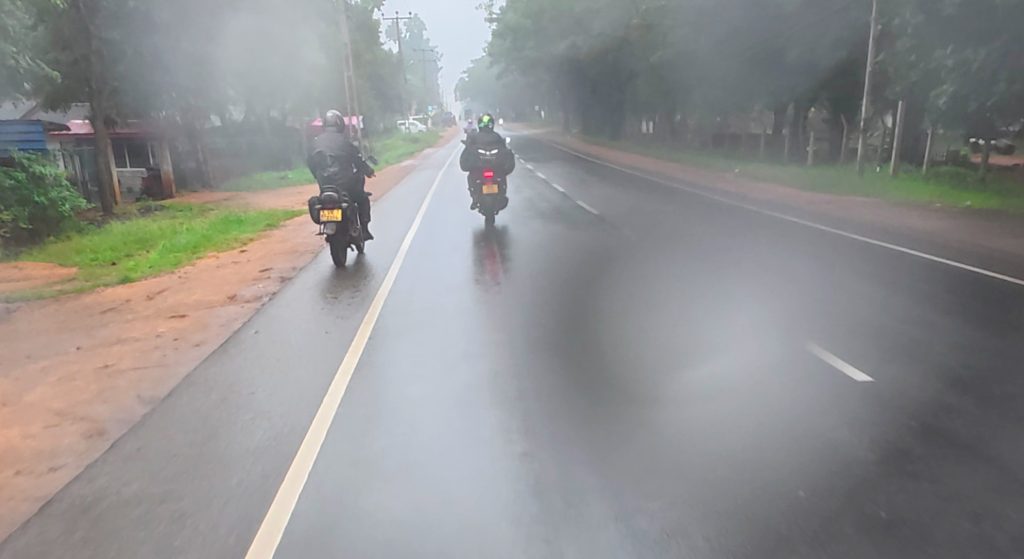
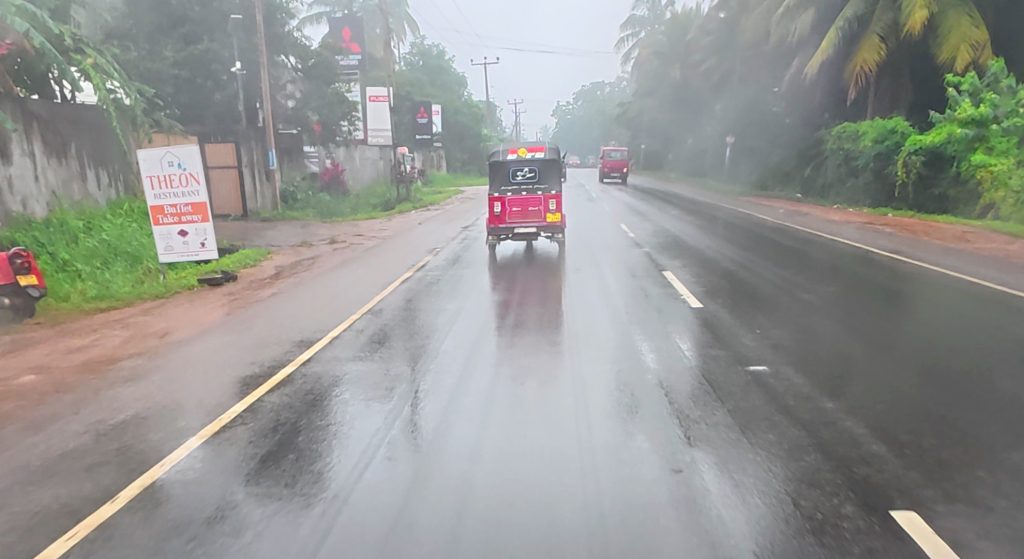
We rode toward Anuradhapura into what turned out to be six hours of more or less continuous rain. It started gently, almost optimistically, and then settled in with purpose. We stopped occasionally — once at a café for a cupcake and an egg roll, which felt like a bold choice under the circumstances. Two police officers were very interested in us, though it wasn’t clear why. But they were very kind.
We kept riding.
On the way to Jaffna earlier in the trip, I’d been caught in rain without proper gear. The wind had cut straight through my soaked jacket and turned the ride into something grim. This time, we were better prepared. In Jaffna, we’d bought local rain gear — bulky, black, utilitarian. Not stylish. Extremely effective They probably saved the day. Even so, by the end, everything underneath was damp. Not soaked. Just tired.
With stops, the ride took about six hours to cover a bit over two hundred kilometres. We were getting used to riding in the rain. When we finally arrived in Anuradhapura, we checked into a small guesthouse down a muddy road and stopped moving altogether.
That was the day.
Jaffna behind us. Rain everywhere.
And the road continuing, whether we were ready or not.